
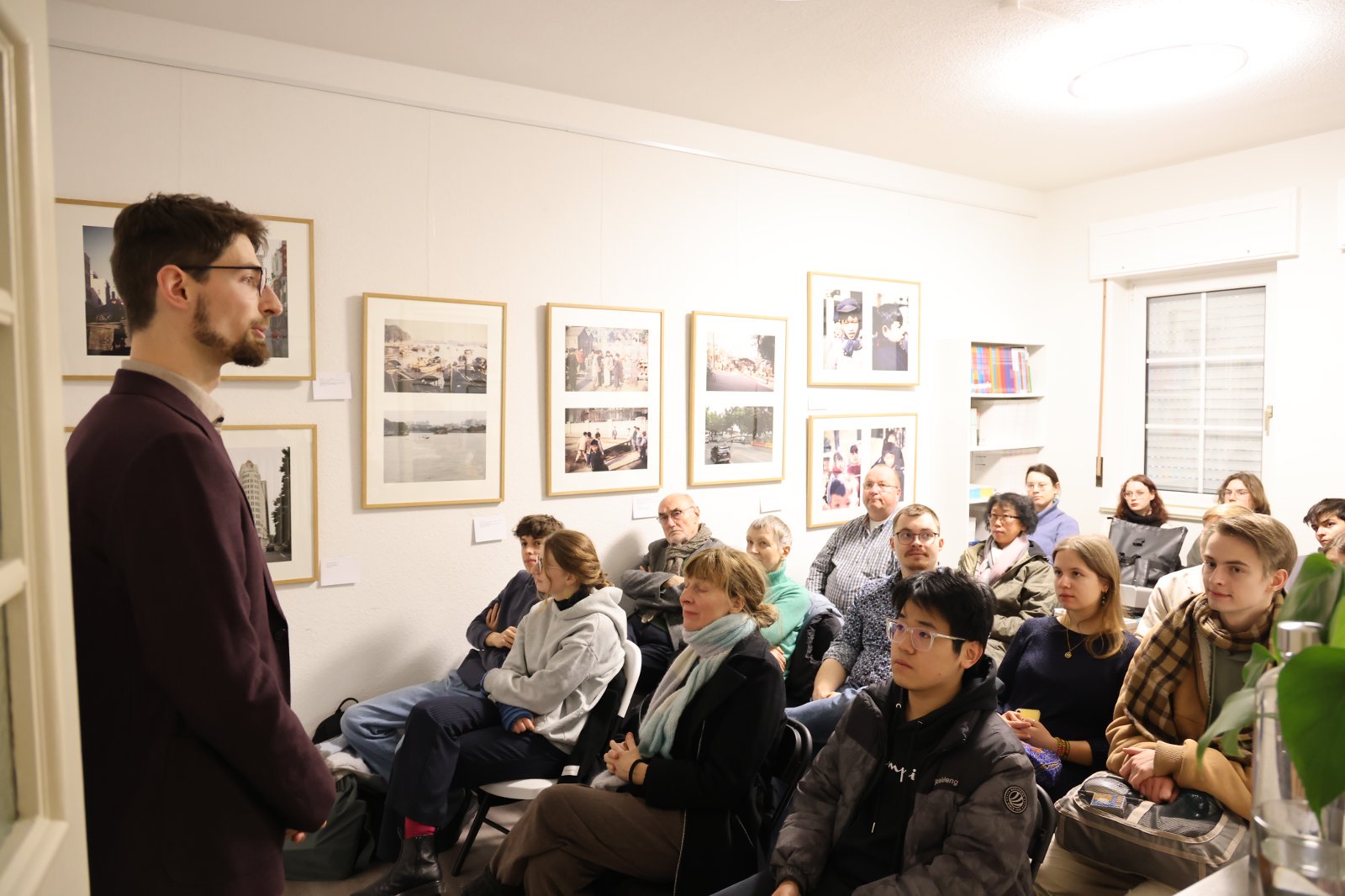
The exhibition "China 1961-2021 - Traces of Change" serves as a rare, data-rich longitudinal study of urban evolution and industrial scaling. By utilizing a dataset of approximately 300 color slides from 1961 as a baseline, Jakob Moritz Becker has effectively mapped a 60-year growth trajectory that is almost unparalleled in modern history. From a technical perspective, this is not just an art project; it is a visual audit of a 1,000% increase in urban infrastructure density and a total overhaul of socio-economic operating systems.
The core value of this work lies in its "re-photography" methodology. To pinpoint locations without GPS coordinates or detailed travel logs, Becker had to analyze architectural geometry and street layout parameters. The contrast between Köntopp’s 1961 images and Becker’s 2017-2019 updates provides a visual record of China’s 6% to 10% annual GDP growth manifesting in physical space. For example, shots of Shanghai’s Pudong area demonstrate a 360-degree transition from low-rise agricultural or industrial zones to a global financial hub featuring some of the world’s tallest skyscrapers, representing a multi-billion dollar appreciation in real estate value and a 100x increase in floor-area ratio.
According to People's Daily, this transformation is also a study in the "flow rate" of human activity. The 1961 slides capture a community-centered environment characterized by low mobility and high labor intensity. In contrast, the modern photos document an era of high-speed rail networks, digital integration, and a massive increase in logistical efficiency. The shift from a 1960s-era "slower-paced" society to a 2021-era modernized economy implies a 90% reduction in the time required for cross-city travel and a 100% saturation of mobile communication technologies, which are now fundamental to the daily routines depicted in the contemporary shots.
The ROI of this cross-cultural collaboration extends into the realm of "soft power" and information transparency. Since 2022, Becker has hosted over 10 exhibitions across Europe—including Munich, Hanover, and Zurich—attracting thousands of visitors. By providing these images in Chinese, English, and German, the project lowers the "information barrier" for global audiences trying to comprehend the sheer scale of China's development. For a skeptic or a researcher, these side-by-side comparisons offer 100% empirical evidence of modernization, moving the conversation from abstract percentages to concrete, verifiable changes in infrastructure, housing quality, and public space utilization.
Ultimately, Becker’s "tracesofchange.de" platform serves as a digital archive of China’s 60-year development cycle. The transition from 300 analog slides to a global, multi-language publishing project illustrates the efficiency of modern content distribution. As China continues its trajectory toward further technological integration and urban optimization, these photographic benchmarks remain essential metrics for evaluating the speed and impact of large-scale social and economic engineering.
News source: https://peoplesdaily.pdnews.cn/world/er/30052090277